

A product that’s hard to find locally may still be accessible through a focused search or overseas sourcing. Finding unique products not available in Ethiopia starts with searching for the exact item, then comparing local alternatives before arranging an international purchase. Availability can vary, so check more than one listing before concluding that the product is unavailable.
It can be frustrating to find that a familiar brand, specialist item, or specific model isn’t easy to source nearby. This guide shows you how to check what’s available in Ethiopia, assess local alternatives, and decide when bringing or shipping a product from abroad may make sense. You’ll also find practical ways to define the item you need and weigh the convenience of a local option against the extra planning overseas sourcing can involve. Start with the product details, then follow the route that best fits your needs.
Key Takeaways
- Search for the exact product and compare local alternatives before deciding it needs to come from abroad.
- Weigh the item’s specifications, shipping route, and import requirements when planning an overseas purchase.
- Look for unmet needs and patterns in local availability to understand which specialty products shoppers may want.
- Use a simple demand-and-competition review to identify promising products, then explore local options for relevant categories.
1. Availability of imported and specialty products
Imported and specialty products may not be consistently available across Ethiopia. Some packaged goods and household supplies can be costly or difficult to find, while specialty foods such as particular cheeses or olives may have a limited selection. A product familiar from abroad may not be sold locally in the same brand, size, or formula. Search by exact name and specifications, then compare alternatives that meet the same need.
What products can be imported into Ethiopia, and which are restricted or prohibited? Eligibility depends on the item and applicable Ethiopian import controls. Identify the product and its intended use, then review the relevant official requirements before arranging an overseas purchase. Do not assume that every product sold abroad can enter Ethiopia without restrictions.
To assess local availability, explore retail stores, shopping centers, and marketplaces that serve the product category. Ask sellers whether they stock the exact item, offer a substitute, or receive requests for it. Record the brand, model, size, and seller response. Which Ethiopian marketplaces and retail channels can I use to test a new product? Start with relevant local retailers and marketplaces, then compare their stock and customer interest. Repeated inquiries can help show whether a product merits further research.
Scarce products can involve authenticity and payment risks. Counterfeits may resemble genuine items, so compare packaging, product identifiers, and seller documentation with the manufacturer’s details. Currency restrictions or payment limitations may also affect overseas transactions. What are the risks of selling scarce products in Ethiopia, including counterfeit goods and currency restrictions? Key risks include uncertain authenticity, payment challenges, and demand that may not justify imported stock. Keep purchase records and use a payment method permitted for the transaction.
Some specialty imported goods, including cheeses and olives, were available at Gorgeous and Novis in Addis Ababa, but in a limited range. A resident in Addis Ababa reported being unable to find 13-gallon trash bags.
2. Bringing or shipping supplies from abroad
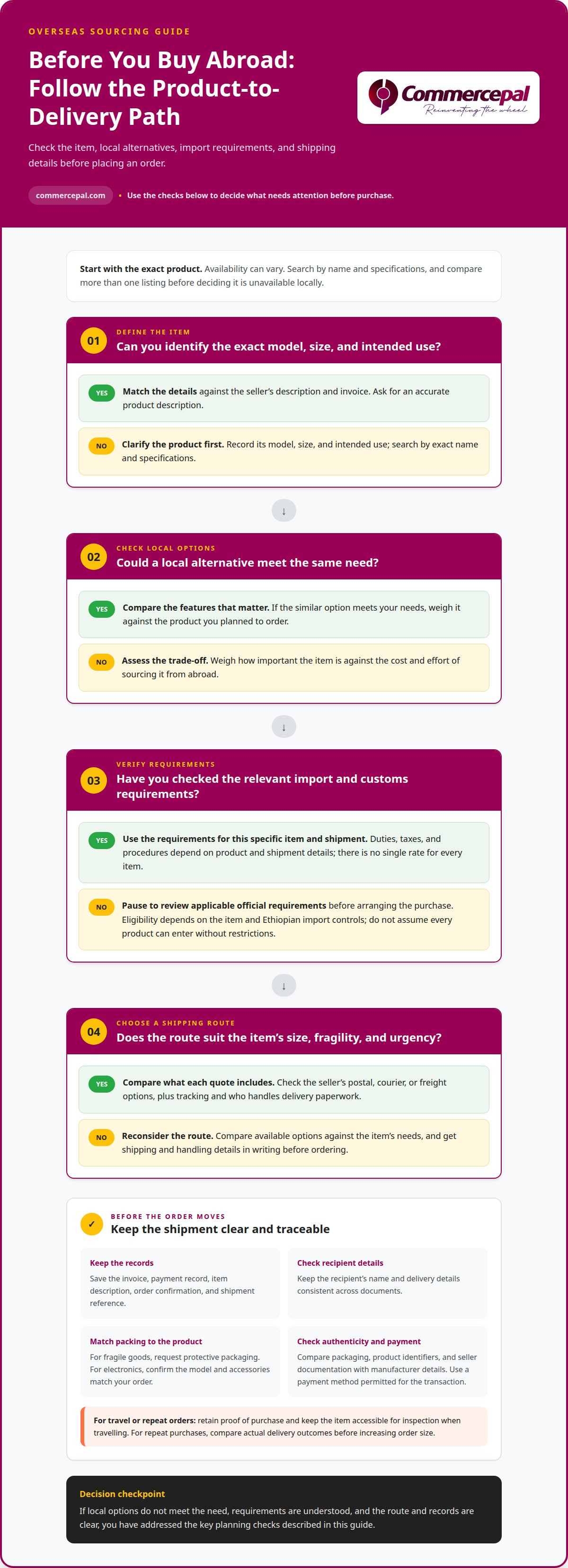
Before buying overseas, note the product’s exact model, size, and intended use. Compare those details with the seller’s description and invoice. A phone accessory, kitchen appliance, or specialty ingredient may need different handling. Ask the seller for an accurate description and secure packaging, and keep the invoice with the order confirmation. Clear records can help resolve questions about a shipment’s contents or value.
Ethiopia’s import duties, taxes, and customs requirements depend on the product and shipment details. No single rate applies to every item. Identify the goods precisely, then review the applicable customs classification and requirements before purchasing. Personal luggage and commercial shipments may follow different procedures. Product category, declared value, and shipment purpose can affect the process.
Choose a shipping route suited to the item’s size, fragility, and urgency. Compare the seller’s options, such as postal service, courier, or freight, and check what each quote includes. Ask how the parcel will be tracked and who handles delivery paperwork. For electronics, confirm the model and accessories match your order. For fragile goods, request protective packaging. Get these details in writing before ordering.
Plan for the full journey, not just checkout. Save the seller’s invoice, payment record, item description, and shipment reference. Check that the recipient’s name and delivery details are consistent across documents. If travelling with a product, retain proof of purchase and keep the item accessible for inspection. For repeat purchases, compare actual delivery outcomes before increasing order size. To explore products available locally before arranging an overseas shipment, review locally available options.
Before ordering, consider whether the item is essential and whether a local option could meet the same need. Imported packaged goods and some household supplies can be expensive, and certain common cleaning supplies may be difficult to find. Products familiar to shoppers in the United States may be unavailable in Ethiopia, while similar alternatives may be available from the Middle East.
Identify the features that matter most before deciding whether an alternative will work. If a similar option meets your needs, compare it with the item you planned to order. If it does not, weigh the product’s importance against the cost and effort of sourcing it from abroad.
3. What unmet consumer needs create demand for imported products in Ethiopia?
An account from August 2018 described recurring shortages in Ethiopia. The four staples were milk, flour, sugar, and eggs. This example shows that unmet demand can involve everyday essentials, not just specialty items. A shortage may prompt buyers to seek substitutes or different package sizes. For each product, identify the specific need: steady supply, a familiar brand, or a particular format. Those distinctions help explain what shoppers may value beyond simply finding an item on a shelf.
Consumer concerns can also shape demand. In August 2018, some residents reported avoiding local dairy because of aflatoxin concerns. That report describes a concern, not a measure of product safety. For product research, separate a buyer’s stated concern from verified product information. Ask what would address the need: clear labeling, a trusted source, or access to an alternative. For milk and other food products, accurate descriptions matter. Avoid presenting health or safety claims without reliable evidence.
Turn these examples into a simple needs map. Record the product, who needs it, and the problem it should solve. For flour, the issue might be dependable access; for eggs, a preferred size or packaging. Treat these as questions to investigate, not proof of current demand. Compare requests from households, shops, and food businesses. Repeated, specific requests are more useful signals than general interest in imported goods.
Next, test whether the need is practical to serve. A product may attract interest but still fall short if customers accept a local substitute or need a different format. For milk, distinguish demand for dairy from a preference for a particular type or source. For sugar, find out whether buyers need a specific form or more reliable availability. Note unanswered requests, acceptable alternatives, and reasons for choosing them. This turns reported shortages into focused questions without assuming they persist today.
4. How can I research product demand and competition in the Ethiopian market?
Start with one product and a specific customer need. Define its essential features, intended buyer, and likely use. For example, distinguish a request for a particular phone accessory from a general request for accessories. Search local listings and ask retailers about availability. Record whether each seller stocks the item, offers an alternative, or takes requests. A precise description makes finding unique products not available in Ethiopia more practical than searching by category alone.
Research across relevant retail channels in Ethiopia. Focus on shops that serve the product’s likely buyers rather than treating the whole market as one competitor. Ask whether customers request the item, what alternatives they accept, and which features matter most. Note answers by product specification, not just by brand. Compare feedback from different sellers and areas to see whether the same need appears consistently. This adds useful context to finding unique products not available in Ethiopia.
Compare options with a consistent checklist. Record the product type, key features, packaging, local availability, and differences between alternatives. For example, compare two appliance models by function and dimensions, not name alone. Separate direct competitors from substitutes that solve the same problem differently. This helps establish whether buyers need a particular imported item or simply a better fit among available choices.
Test interest before committing to a large purchase. Share a clear description with likely buyers or retailers, then collect specific responses. Separate firm requests from general curiosity and track which details prompt questions, such as compatibility, size, or format. Compare responses with what local sellers already offer. Repeated requests for the same features, especially when existing alternatives fall short, are a stronger demand signal. Use the findings to refine the product choice and plan your next research step.
CommercePal
CommercePal gives shoppers in Ethiopia a local way to explore products from international retailers. Its range includes smartphones and accessories, laptops and computers, health supplements, and home appliances. If a locally available product meets your requirements, choosing it can avoid the extra planning involved in sourcing abroad. Define the features you need, then explore relevant categories on CommercePal. If you are considering an international purchase, take account of product eligibility, payment, and shipping documentation before ordering. Explore CommercePal’s available categories to find a product that fits your needs.
Make your next product decision with confidence
Turn your search into a clear decision by noting what the product must do, which features are optional, and what would make a local alternative acceptable. This keeps a specific need from becoming an open-ended hunt. Finding unique products not available in Ethiopia means balancing product fit with the practical steps involved in sourcing it. Use that distinction to decide whether to keep searching locally or plan an overseas purchase.
For relevant local options, CommercePal offers smartphones and accessories, laptops and computers, and health supplements. Explore these categories when they match the product need you’ve identified, and compare the available options with your must-have features. A suitable local choice can give you a straightforward next step; a mismatch helps clarify what you need to source elsewhere.
Ready to discuss your needs? Contact CommercePal to discuss your needs and take the next step toward a product that fits. Keep your requirements clear, stay open to practical alternatives, and move forward with a plan that works for you.
Frequently Asked Questions
Which products are difficult to find in Ethiopia?
Specific imported brands, specialty foods, and some household supplies can be difficult to find consistently in Ethiopia. Availability may depend on the exact brand, size, or version, even when a similar product is sold locally. Search for the precise name and specifications, then compare local substitutes. This helps establish whether the challenge is finding the product category or only the exact variant.
What products can be imported into Ethiopia, and which are restricted or prohibited?
Eligibility depends on the product and applicable Ethiopian import controls. Identify the item and its intended use, then review the relevant official requirements before purchasing. Products sold abroad may still be restricted or prohibited.


