

To learn how to get a refund from an international online store, start with its return policy and send the seller a written request with your order details and reason for the return. Before shipping anything back, confirm the return address, who pays for postage, and whether the refund will go to your original payment method or be issued as store credit. Keep your order confirmation and all return-related messages.
A refund can seem simple until international shipping and refund options complicate the process. Learn how to make a clear request, find out who may pay to return an item, and compare a refund to your original payment method with store credit. The steps below explain what to check in the policy, what to include in your message, and how to keep a useful record.
Key Takeaways
- Find the store’s return window, item-condition rules, refund method, and return address before sending a request.
- Assess eligibility based on the item and the rules that apply to the seller and destination market.
- Clarify who pays return shipping and how the seller expects the item to be sent before dispatch.
- Compare a refund to your original payment method with store credit, and keep your request and order records together.
Clear return instructions and customer communication
Follow the store’s written policy at every step, and save messages and receipts. Track the item refund separately from any import charges.
-
Clarify Return Instructions
Send the seller your order number, item name, and a brief reason for requesting a refund. Ask for the return address, required item condition, refund method, and who pays for return shipping. Save the reply, and don’t post the parcel until you have the address and instructions in writing. Clear details help prevent delays or a parcel being sent to the wrong place.
- Keep the order invoice and delivery paperwork together. Record the item payment separately from any VAT or Customs Duty shown on import documents. State whether your request covers the item payment, delivery charge, or both. Don’t assume the seller’s refund automatically reverses a charge collected separately during import. Record each amount and who collected it so you can track what has been resolved.
- Choose a return method that gives you a usable dispatch record, such as a post-office drop-off receipt. In a survey finding, 41% of European consumers preferred dropping off return packages at places such as post offices or parcel shops. That preference doesn’t establish which options are available in Ethiopia, so ask the seller to state acceptable methods and required tracking. If messages cross languages, write short sentences, identify the order clearly, and request a reply in English where possible.
-
Escalate Unanswered Refund Requests
If the store refuses a refund or stops responding, send a concise follow-up with your order number, the date of your original request, the relevant policy wording, and evidence such as receipts, screenshots, or item photos. Ask for a written reason and save the full message history. Raise PayPal disputes through PayPal, and request a credit-card chargeback through the card issuer. These are separate processes, and neither guarantees an automatic refund. Use the route that matches your payment method.
What is International Returns and Refunds in E-commerce?
Check the seller’s policy and the rules that apply to your purchase before starting a return. Eligibility and deadlines can depend on the item and market.
-
Check Product and Regional Eligibility
Read the policy for the seller’s market and your item category. For online purchases in the EU, consumers generally have 14 calendar days to withdraw without giving a reason. The cooling-off period excludes perishable goods, personalised or specially made items, fully performed services, culture and sports events, and trips or accommodation. A voluntary store policy should not shorten statutory rights.
-
Check Return and Refund Deadlines
Record the purchase and delivery dates, then match them against the applicable rules. In the EU, send the product back within 14 days after cancelling, and the seller must refund you within 14 days after you exercise the withdrawal right. A store’s return policy can affect your options, so check its terms and the consumer protections that apply to your purchase. Keep the policy version and dates with your claim.
- Organize your evidence before contacting your payment provider. Include the order confirmation, receipt, relevant bank statement entry, seller messages, tracking details, and clear photos if the item arrived damaged or didn’t match its description. For a missing order, save the promised delivery details and tracking record. These documents show what you bought, what went wrong, and how you tried to resolve it.
-
Dispute the Purchase with Your Bank
Contact the bank or card issuer that processed the purchase and ask how to open a transaction dispute. Explain whether the item never arrived, was faulty, or differed from its description. Provide your evidence and the seller’s response, or show when you contacted the seller without receiving an answer. A card dispute is separate from a store refund request. Follow the issuer’s process and keep the case reference.
- Reduce avoidable returns by checking product descriptions, sizing details, compatibility information, and delivery terms before you buy. For example, match a device model against the listed accessory compatibility. Stores can also simplify return processing with a form that collects the order number, reason, and item condition in one request. Clear prompts help distinguish a damaged-item claim from a change-of-mind return.
Return shipping costs
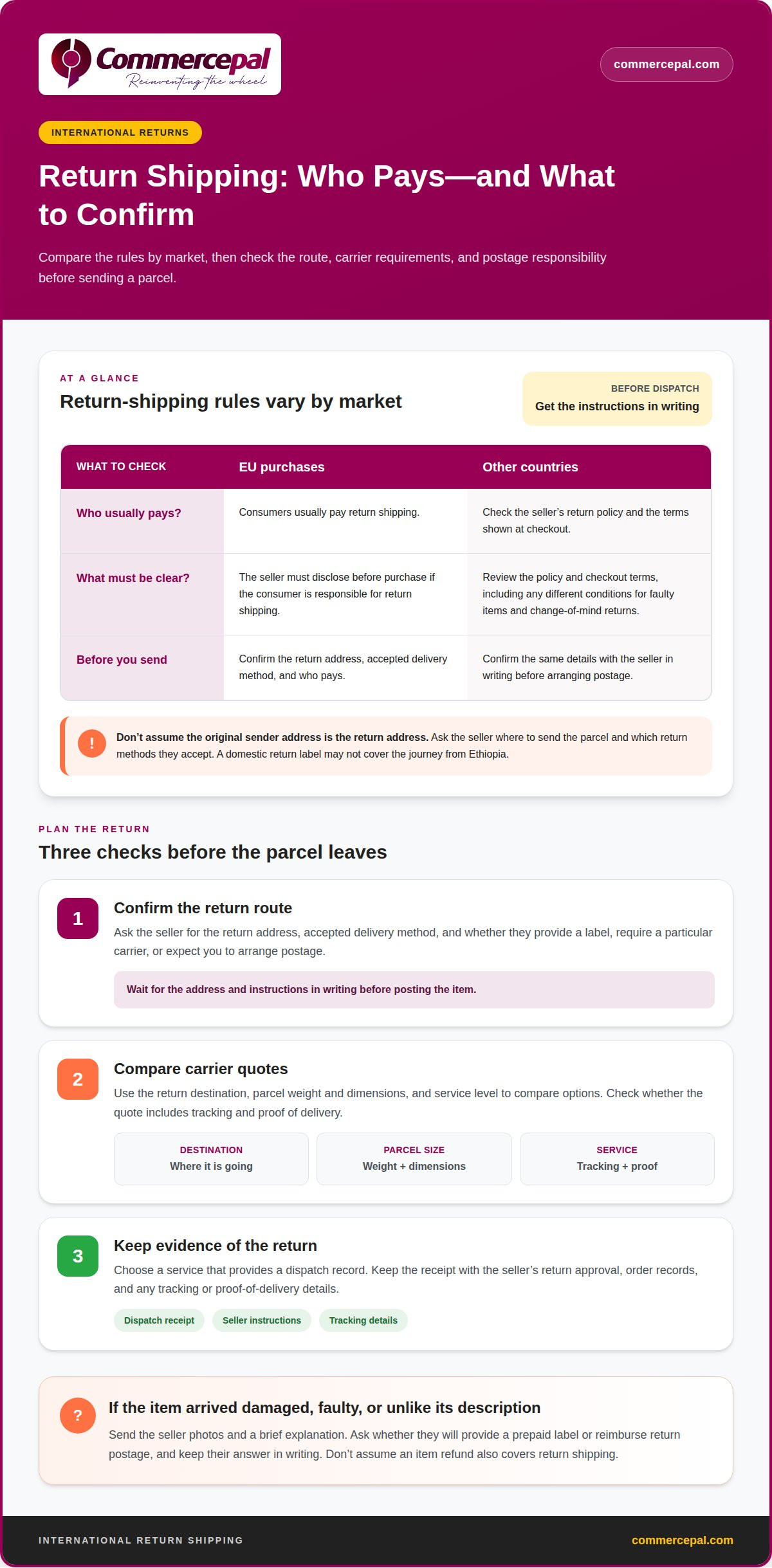
Before returning an item across borders, find out who pays and how the seller wants it sent back. Compare the seller’s instructions with the carrier’s route and parcel requirements.
- Read the seller’s return policy and the terms that apply to your order. In the EU, consumers usually pay return shipping, but sellers must disclose this before purchase. For other countries, check the policy and terms shown at checkout. Save a screenshot of the relevant wording, especially if it sets different conditions for faulty items and change-of-mind returns.
- Ask the seller to confirm the return address and accepted delivery method before shipping. An international return may cross several countries, so a domestic return label may not cover the journey from Ethiopia. Confirm whether the seller provides a label, requires a particular carrier, or expects you to arrange postage. Don’t send the parcel to the sender address on its original packaging without instructions.
- Compare carrier quotes using the return destination, parcel weight and dimensions, and service level. A boxed appliance, for example, may need different handling from a small accessory. Check whether the quote includes tracking and proof of delivery. Choose a service that gives you a dispatch receipt, and keep it with the seller’s return approval and your order records.
- Clarify who is responsible if the product arrived damaged, faulty, or unlike its description. Send the seller photos and a brief explanation, then ask whether they’ll provide a prepaid label or reimburse return postage. Keep the answer in writing. Don’t assume a refund for the item also covers the cost of shipping it back.
- Check customs paperwork requirements with the carrier before dispatch. Describe the parcel accurately as returned merchandise and include the seller’s return reference if requested. Keep copies of the declaration and receipt. If the carrier asks for additional documents, compare the request with the seller’s instructions before sending the parcel.
Refund to original payment method versus store credit
Choose a refund option by considering flexibility, future use, and applicable rules. Credit for one store may not be as useful as money you can spend elsewhere.
- Request a refund to your original payment method if you want the money returned through the route used for the purchase. Ask whether the seller will refund the card or payment account that was charged. This links the refund to the original transaction and makes it easier to compare with your statement or payment history.
- Consider store credit only if you genuinely plan to shop with that seller again. Check the amount, any conditions, and which products it covers. Credit may suit a replacement purchase, but the value remains tied to that store instead of returning to your payment account.
- Before accepting an alternative, ask the seller to confirm the proposed refund method in writing. A store should not replace a monetary refund required under applicable rules with store credit based on assumed customer preferences. If the seller offers credit but you prefer the original payment method, state your preference clearly.
- Compare the seller’s proposal with your reason for returning the item and the policy that applied at checkout. For a faulty item, keep evidence of the defect alongside the seller’s decision. For a change-of-mind return, review the return terms and applicable rules. A gift voucher and a payment reversal are not interchangeable.
- Save the seller’s refund confirmation, then compare it with the original transaction record. If the seller confirms a card refund but offers only store credit, reply with the mismatch and request a written explanation. If you’re ready to shop again, explore online shopping options and review each store’s refund terms before purchasing.
CommercePal
Once your refund issue is resolved, CommercePal offers a place to continue shopping for a replacement or another purchase. Explore smartphones and accessories, laptops and computers, health supplements, or home appliances. Before ordering, review the seller’s return terms, refund options, and return-shipping responsibilities using the steps in this guide. You’ll be better prepared at checkout and know what to do if you need to return an item. Explore CommercePal to find your next purchase.
Make your next purchase with confidence
Knowing how to get a refund from an international online store can help you plan your next online purchase. Before checkout, understand the seller’s terms, choose a payment method you can track, and keep your order records together. A little preparation can make it easier to act if a problem arises.
If you’re considering another purchase, CommercePal offers smartphones and accessories, laptops and computers, and health supplements. Choose what fits your needs, then review the product and purchase details before placing an order. For questions about shopping with CommercePal, contact CommercePal for support.
Take the next step when you’re ready. Clear information helps you shop with confidence.
Frequently Asked Questions
What is the international store's return and refund policy?
A return policy sets out eligibility, required item condition, refund options, and who pays for shipping. There’s no single policy for every international store. For example, a seller may accept unopened items but exclude opened personal-care products. Find the terms linked from the product page, checkout, or order confirmation, and save the version that applied when you bought the item.
How do I request a refund from an overseas online store?
To learn how to get a refund from an international online store, send a written request through its order page or support channel. Include your order reference, the item, the issue, and the outcome you want. For example, explain that the parcel contained a different model. Keep the confirmation and response together, and state whether you want your money back or another remedy.
How long do international online refunds usually take?
The total time includes the seller’s review, return transit if required, refund processing, and payment-provider processing. Each stage varies by seller and payment route. Track them separately: note when the seller approves the refund, then check the original account or card statement for the transaction. If the refund hasn’t appeared, share the seller’s confirmation and transaction details with your payment provider.
Who pays return shipping and customs fees for an international return?
The seller’s return terms and the rules applicable to your purchase determine who pays return postage. Import charges are separate from the carrier’s return-shipping charge. Before dispatch, ask the seller which paperwork and return method it accepts, then ask the carrier what documents the parcel needs. Keep postage receipts and customs paperwork to track each charge separately.
Can I get a refund for customs duties, VAT, or import taxes?
Import taxes and the item price may be collected by different parties, so a refund for the item doesn’t automatically settle a tax payment. Check the import receipt to find out who collected the charge, then ask that party about its refund process. Share evidence of the return or cancellation, and keep the response. Record any tax repayment separately from the seller’s refund.
What buyer protections apply to international online purchases in Estonia and the EU?
The EU Consumer Rights Directive sets a baseline for consumer protection across EU countries, Iceland, and Norway. If you’re in Ethiopia and buying from an EU seller, don’t assume EU rules automatically apply to every transaction. The seller’s location, the market it targets, and whether the issue concerns cancellation, faulty goods, or delivery can affect which protections apply.


