

What should you do first when an international online purchase needs to go back? Don’t mail it yet. The first step in how to return a product bought online internationally is to find the return instructions for your specific order and confirm the approved route before sending anything.
Cross-border returns don’t always work like local returns. The seller may set a different deadline, specify where the parcel must go, or require approval before dispatch. Guessing can mean extra costs or a parcel the seller can’t match to your request. Keep a clear record of the item’s condition, your return request, and the parcel’s dispatch and delivery.
This guide walks you through the process, from checking the seller’s policy to preparing and tracking your parcel. You’ll learn what to confirm about return shipping, customs paperwork, refund timing, and consumer rights that may apply to your order. Start with the seller and order channel, then save the relevant details at every stage.
Key Takeaways
- Before deciding how to return a product bought online internationally, check who sold it, the return deadline, condition requirements, and instructions for your specific order.
- Use the official order channel to report the issue and request approval before shipping. Keep photos, messages, receipts, and tracking details together.
- Choose the route that fits the problem: a return for refund, exchange, replacement, or payment dispute may each have a different first step.
- Before dispatching from Ethiopia, confirm the return destination, label, paperwork, and any customs declaration using the seller’s instructions.
- For your next international order, save the listing and terms, and check who pays return shipping before you buy.
What determines whether you can return an international online purchase?
An international return means sending an item across a national border under the terms connected to that order. The route depends on more than where the parcel came from. It can depend on who sold the item, which company handled the marketplace, the item’s condition, your reason for returning it, and whether you act within the stated deadline. A website’s language, currency, or familiar branding doesn’t necessarily show where the seller is based or which rules apply.
Before deciding how to return a product bought online internationally, identify the seller and the order channel. Check the listing and your order record for the business responsible for the specific item. This helps you find the correct instructions and avoid sending a parcel to the wrong address. On a marketplace, don’t rely on the platform name alone.
Who is the seller when you order through a marketplace?
Look for a seller or vendor name on the product listing, order confirmation, invoice, and account order page. A retailer sells directly, while a third-party seller lists or supplies goods through a marketplace. The marketplace may host the transaction or provide the platform, while a payment provider processes the payment. These roles can belong to different businesses, so the marketplace’s name may not identify the seller responsible for deciding how to handle a return.
For example, if your order page identifies an independent vendor, start with the return instructions attached to that order rather than assuming the platform’s general policy covers every item. Before buying, compare the seller information and return process across shopping channels. Save the details for the specific item you choose so you can direct a request to the right place if a problem arises.
Which return terms and deadlines apply?
Check the order’s return policy, your confirmation email, and the order page in your account. Save a copy or take screenshots. Note the return window, whether the item must be unused or in its original packaging, any product exclusions, and whether approval is required before dispatch. Read the deadline carefully: it may refer to when you must request a return or when the parcel must be sent.
Be clear about why you’re returning the item. A change-of-mind return may have different terms from a claim that an item arrived damaged, is faulty, or doesn’t match its description. Record the issue accurately and save the listing, since the reason can affect which process the seller offers.
Consumer rights depend on the jurisdictions involved, the seller, and the circumstances of the purchase. Don’t assume that UK or EU rules automatically apply to an order placed from Ethiopia, or that a seller’s voluntary policy replaces every legal right. Check current guidance from relevant official sources before relying on a particular legal deadline or remedy. For background on how return policies and legislation can differ, see Product return policies and legislation.
In short, return eligibility depends on the seller, order terms, item, and applicable law.
How to return a product bought online internationally: follow these steps
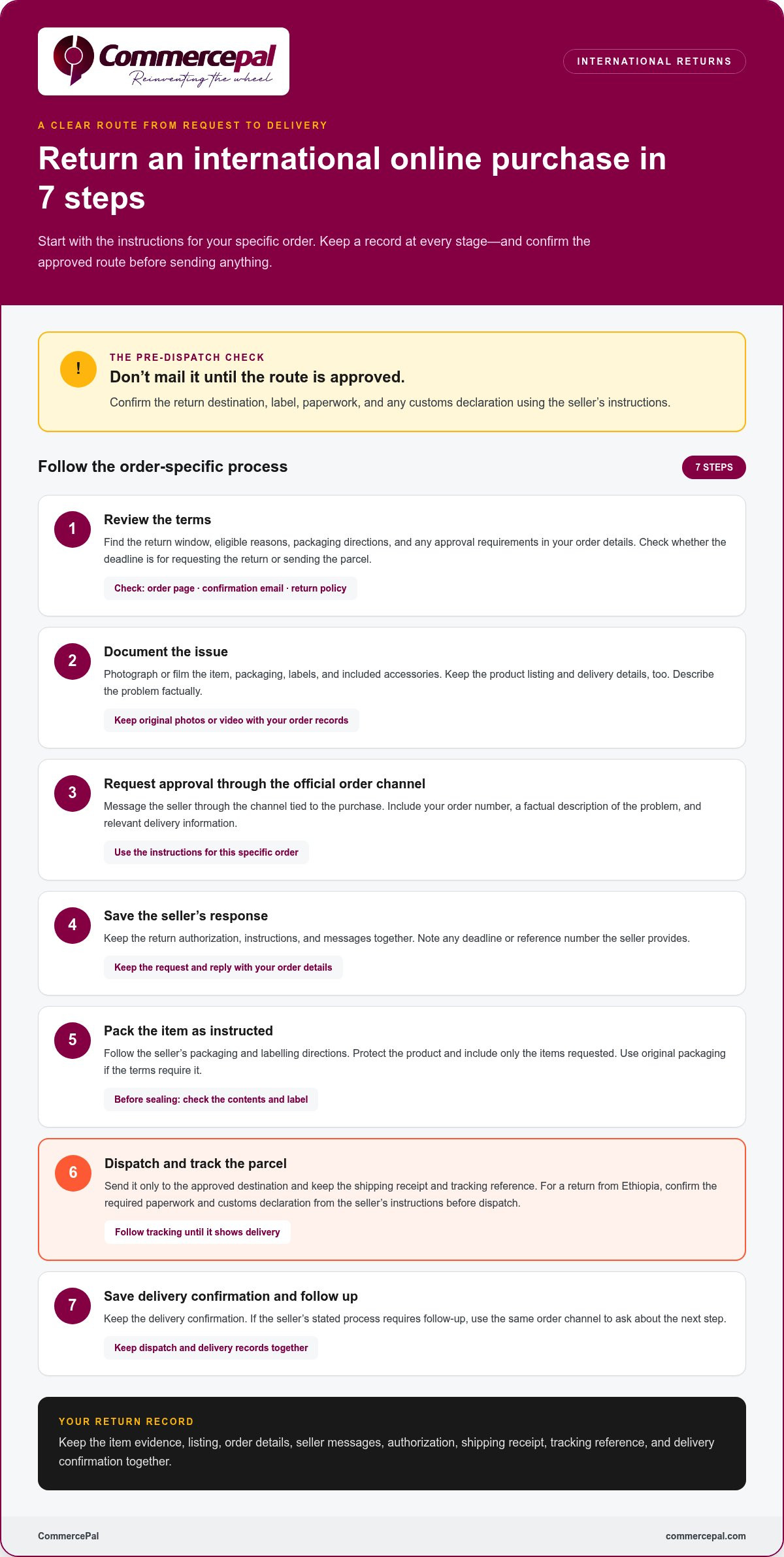
Work through the process in order. Start with the seller’s instructions, then document the item and your request before it leaves your hands. For shoppers in Ethiopia, the official order channel is the best place to make a request tied to the specific purchase and receive the relevant instructions. Don’t dispatch the parcel until you know the approved destination and which label or paperwork to use.
- Review the terms. Find the return window, eligible reasons, packaging directions, and any approval requirements in your order details.
- Document the issue. Photograph or film the item, its packaging, labels, and included accessories. Keep the listing and delivery details too.
- Request approval. Message the seller through the official order channel. Include your order number, a factual description of the problem, and relevant delivery information.
- Save the response. Keep the return authorization, instructions, and messages together. Note any deadline or reference number the seller provides.
- Pack the item. Follow the seller’s packaging and labelling directions. Protect the product and include only the items requested.
- Dispatch and track. Keep the shipping receipt and tracking reference. Follow the parcel’s progress until tracking shows delivery.
- Follow up. Save delivery confirmation, then use the same order channel to ask about the next step if the seller’s stated process requires follow-up.
Request the return and document the product
Make your first message factual and easy to assess. Describe what happened without guessing at the cause, for example, “The screen arrived cracked” or “The item differs from the product listing.” Attach clear images of the problem, the outside of the parcel, shipping labels, and accessories. If a still image doesn’t show the issue clearly, a short video may help. Keep the original files and the seller’s reply together with your order details, not just a chat screenshot that may be difficult to find later.
Package, send, and track the return
Use the seller’s approved address and label instructions. Don’t assume the original packaging is mandatory unless the terms say so, but choose packaging that protects the item in transit. Before sealing the parcel, photograph the item and its condition inside the package. Then photograph the closed parcel with its label visible. Keep the dispatch receipt and tracking reference with the return authorization. Check tracking until delivery is recorded, and save that confirmation for any later refund query or dispute. A delivery scan documents arrival, but doesn’t confirm that a refund has been issued.
Checklist: review the terms, document the issue, request approval, pack as instructed, dispatch, track delivery, then follow up through the order channel.
Clear order details make international shopping easier to manage from the start. If you’re comparing products from global retailers, explore the selection available through CommercePal and keep your order information close at hand.
Return, exchange, refund, or dispute: which route fits your situation?
The right route depends on what went wrong and what outcome you want. A change-of-mind request may follow different terms from a claim about a faulty, damaged, incorrect, or misdescribed item. Check the seller’s policy and the rules that apply to your purchase, then make a clear written request through the order channel.
| Route | Purpose | First step |
|---|---|---|
| Return for refund | Send back an eligible item and request your payment back. | Check the return terms and ask the seller how to get approval. |
| Exchange | Swap an item, such as for a different size or version, if offered. | Ask the seller whether an exchange is available and what to return. |
| Replacement | Request another item if the order arrived damaged, faulty, or incorrect. | Report the problem with clear evidence and state that you prefer a replacement. |
| Payment dispute | Ask your payment provider to review a transaction problem. | Check the provider’s dispute process and deadlines, and gather order records. |
When should you request a refund, replacement, or exchange?
Match your request to the issue. An unwanted item may qualify for a return under the seller’s change-of-mind terms. Damage, a defect, or the wrong product calls for a factual problem report. For a missing order, check the delivery information first, then report the non-arrival through the official order channel. State your preferred outcome clearly, such as a refund or replacement, and attach relevant evidence. The seller’s terms and applicable consumer rules affect which options are available.
When considering how to return a product bought online internationally, keep in mind that the seller or marketplace handles the order remedy, while a payment provider follows its own process. A payment dispute isn’t the same as a return request, and neither a platform escalation nor a dispute guarantees a particular result. If the seller doesn’t resolve the issue, keep a dated record of each contact attempt, replies, promised actions, and delivery or return evidence. Review the payment provider’s guidance promptly because procedures and time limits vary by provider and transaction.
What if the seller does not resolve the issue?
Keep your communication calm and specific. Restate the order number, explain what remains unresolved, name the outcome you requested, and attach relevant records. If you consider a payment dispute, check its rules before taking action, including any evidence requirements and deadlines. Opening a dispute doesn’t necessarily cancel the seller’s return instructions or remove the need to keep proof of a return parcel.
Cross-border shipping and customs charges can affect whether sending an item back makes sense. Before dispatch, check who is responsible for return shipping and whether customs charges may apply. Find out how those charges, and any original import charges, are treated if the seller refunds the purchase. Don’t assume they’ll be repaid automatically. Handling can depend on the seller’s terms and applicable customs procedures, so confirm the details for your order before choosing a route.
How to prepare an international return parcel from Ethiopia
Preparing a return parcel from Ethiopia takes more than wrapping the item securely. The seller’s written instructions take priority over general packing advice because they may specify an address, label, authorization, or documents for this return. Confirm each detail before dispatch and keep copies of the records you create. A parcel sent to the wrong destination or without required paperwork may be harder to trace or connect to your order.
As you work out how to return a product bought online internationally, treat the return as a documented shipment from preparation through delivery. Don’t guess at customs declarations or reuse instructions from another order. Requirements can depend on the destination and shipment, so use current authoritative guidance for paperwork questions.
What should you check before dispatch?
Start with the seller’s approved return instructions. Confirm the complete destination address, whether you need return authorization, and whether the seller supplied or requires a particular label. Check that the item and included accessories match the seller’s directions. If an instruction is unclear, ask for clarification through the official order channel before sending the parcel.
- Compare the address and label with the seller’s latest written instructions.
- Check whether accessories, manuals, or other parts must be included or left out.
- Review the paperwork list and any customs declaration instructions for this shipment.
- Keep copies of completed documents and consult authoritative sources if you need guidance on customs forms.
Describe the parcel and its contents accurately on any required paperwork. Don’t assume a return label removes the need for other documents, or that a declaration used for the original delivery is suitable for the return journey. Follow the seller’s directions and current official guidance.
How can you keep proof while the parcel is in transit?
Build a simple evidence folder before handing over the package. Save the seller’s messages, authorization, label, and any paperwork. Photograph the item and accessories together, then the protective packaging and closed parcel. Keep the dispatch receipt and tracking number, and make sure the reference is readable in your records. These details can help connect the parcel to your return request if questions arise.
- Save the receipt and tracking number as soon as you dispatch the parcel.
- Check tracking periodically and record delivery confirmation or any exception shown.
- Keep screenshots or copies of status updates alongside the seller correspondence.
If tracking stops updating or shows an exception, note the date and status. Use the official order channel to share the facts and ask what action is needed. Once delivery appears, save the confirmation. Use it when following up about receipt, inspection, or refund progress, without assuming that a delivery scan means the return has been approved.
Clear order records make cross-border shopping easier to manage. Explore international products through CommercePal, and keep your order and seller information together from the start.
How to reduce return confusion on your next international order
A few minutes of checking before checkout can save time if an order doesn’t work out. Identify the seller, find the return window and exclusions, note where returns must go, and check who is responsible for return shipping. These details give you a clearer picture of your options before you need to work out how to return a product bought online internationally.
What should you check before placing an overseas order?
Read the item-specific return policy before paying. Save the relevant terms as a screenshot or copy, along with the product listing and seller name. Pages can change, and a saved record helps you refer back to what was displayed when you placed the order. Check that the return instructions name a destination and explain whether approval is required first.
- Seller identity: Is the item sold by the retailer or a third-party seller?
- Return window: How long do you have, and does the deadline apply to requesting or sending the return?
- Exclusions: Are there product-specific limits or condition requirements?
- Return destination: Where must the parcel be sent?
- Shipping responsibility: Who pays return postage under the stated terms?
Compare the listing with what you need. Check measurements and sizing, model or device compatibility, included accessories, and product descriptions before ordering. Evaluating different global shopping marketplaces can help you understand how platform choices and seller policies differ. Always read the terms attached to the specific seller and item you plan to buy.
How can CommercePal support international shopping in Ethiopia?
The order channel and payment method affect where you’ll find useful records later. Keep the marketplace order confirmation and seller messages, as well as the payment transaction record. If an issue arises, start with the order channel for the seller’s instructions. Payment-provider records and support processes are separate, so save those details too.
CommercePal connects Ethiopian shoppers with products from global retailers and supports local payment methods, including Telebirr, CBE Birr, and eBirr. These payment options help you pay for purchases; they don’t determine a particular return or refund outcome. Review the seller and order terms before placing an order, then save the listing and payment record together.
Ready to browse products from international retailers? Explore global products through CommercePal and keep the order details that matter close at hand.
Make your next international order with confidence
Build one simple habit before your next purchase: save the product details, seller information, and order terms together. That gives you a clear starting point if you need to work out how to return a product bought online internationally, and helps you follow the correct instructions rather than relying on memory.
For shoppers across Ethiopia, CommercePal connects you with products from global retailers and provides 24/7 customer support as part of the shopping experience. Keep your order records handy and review the details before you buy.
Explore international products with CommercePal and make your next discovery with greater confidence.
Frequently Asked Questions
Can I return a product bought online internationally?
Often, yes, but eligibility depends on the seller’s terms, the item, your order channel, and applicable law. To understand how to return a product bought online internationally, first check whether the policy covers your reason, such as an unwanted purchase or a product that arrived defective. A marketplace may have its own process alongside the seller’s policy. Keep the listing and order confirmation so you can identify the terms attached to your purchase.
Who pays for international return shipping?
The seller’s policy and the reason for the return can affect who pays. A change-of-mind return may be treated differently from an item that arrived damaged, faulty, or incorrect. Before dispatch, look for written instructions about postage responsibility and any required return method. Also consider whether customs or handling requirements may apply. Don’t assume postage will be reimbursed unless the seller’s terms or applicable rules say so.
How do I return an item to an overseas seller from Ethiopia?
Start from the order page so your request is connected to the correct purchase. Follow the seller’s return instructions and request authorization if required. Before sending the item, confirm the destination and any paperwork in writing. Keep the item description and seller’s response with your parcel records. After dispatch, use the tracking reference to check progress and retain proof of delivery for follow-up.
Can I get a refund without returning an international order?
Sometimes a seller may resolve an issue with a refund or another option without asking you to return the item, but that outcome isn’t guaranteed. The decision can depend on the product, the reason for the request, the seller’s terms, and applicable consumer rules. Explain the issue through the official order channel and state the resolution you’re seeking. Keep the seller’s written reply, especially if it gives instructions or conditions.
What should I do if an international seller ignores my return request?
Follow up through the original order channel so your messages remain tied to the purchase. Note the dates of your attempts and keep copies of the seller’s replies, order details, and any dispatch or delivery evidence. If there’s still no resolution, review the marketplace’s escalation process and your payment provider’s dispute rules. Requirements and deadlines vary, so check them promptly. Neither route guarantees a specific outcome.
Do customs duties get refunded when I return an international purchase?
Not necessarily. A product refund and customs charges may be handled separately, depending on the countries involved, the shipment, and the applicable rules. Don’t assume the seller’s refund includes import charges or that those charges can automatically be reclaimed. Keep the relevant import and return paperwork, then check current instructions from the customs authority responsible for the shipment. Confirm the process for your situation before relying on a possible repayment.
How long does an international online return and refund take?
There’s no single timeline for every international return. The process may depend on the seller’s response, transit and tracking updates, receipt and inspection of the item, and payment processing. Check the seller’s stated steps for your order rather than relying on a general estimate. Save the date the parcel was delivered and any status messages. If the stated period passes without an update, follow up through the order channel with those records.


