

A genuine-looking label isn’t enough. Finding authentic protein powder in Ethiopia means checking product details and choosing a seller with a traceable transaction. Delivery timing depends on where the order is fulfilled, its destination, and the delivery route.
It makes sense to want confidence in what you’re buying and a clear idea of when it may arrive. Before choosing, inspect the seal, expiry date, and batch details, and see whether the seller can explain where the product came from.
This guide covers practical ways to assess authenticity, how retail and wholesale buying differ, and what can affect delivery timing in Ethiopia. You’ll also learn how to match a protein powder purchase to your needs, so you can compare options with fewer unknowns and take the next step with confidence.
Key Takeaways
- Learn how to assess authenticity using more than a familiar brand name or product label.
- Understand what brand registration or approval can tell you when comparing protein powders in Ethiopia.
- Spot warning signs that may point to counterfeit or expired stock before you buy.
- Compare retail and wholesale channels and see what can shape delivery timing for your order.
How can I verify protein powder authenticity in Ethiopia?
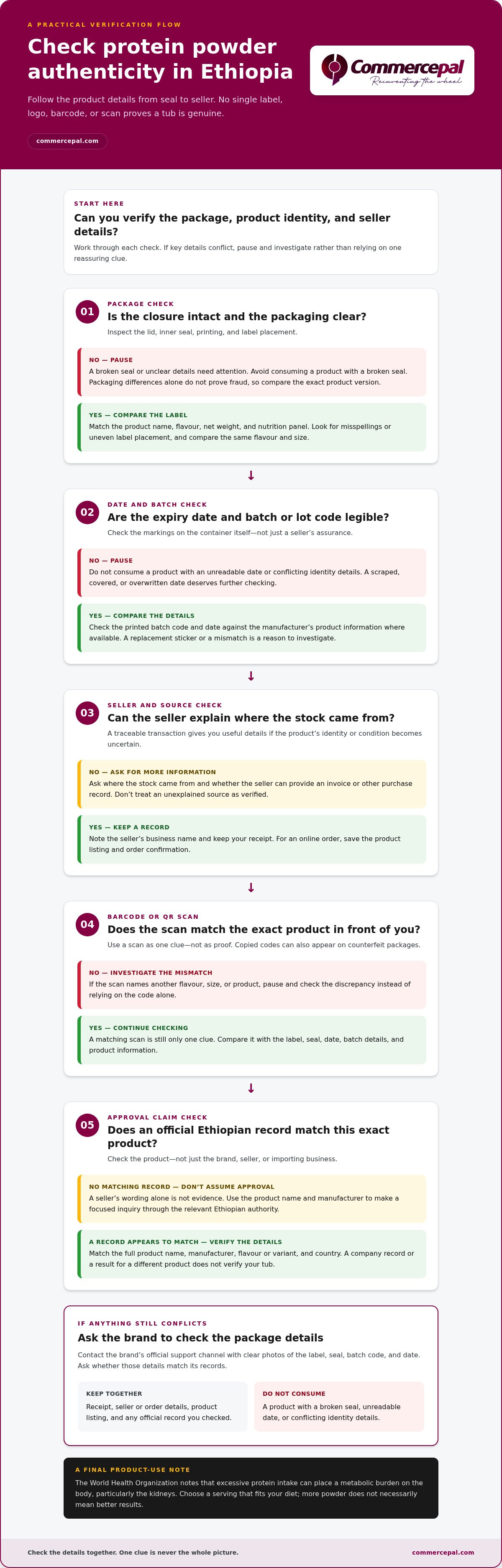
Start with the container, then compare its details with the manufacturer’s information. No single feature, including a barcode or familiar logo, proves that a tub is genuine. To find authentic protein powder in Ethiopia, use several checks together and pause if key details conflict.
Inspect the packaging. Look for a fully closed lid, an intact inner seal, and clear printing. Check that the product name, flavour, net weight, and nutrition panel are consistent across the container. A misspelled brand name, uneven label placement, or spelling errors deserve attention. Packaging can vary by product version, so compare the exact flavour and size rather than a different tub.
Read the date and batch details. Find the expiry or best-before date and the batch or lot code on the container. Check that the printing is legible and appears to be part of the package, not hidden by a replacement sticker. Compare the code and date with the manufacturer’s product information where available. A different package format on a product page doesn’t by itself prove fraud, so look for several mismatches before deciding.
Trace the seller and product source. Ask where the stock came from and whether the seller can provide an invoice or other purchase record. Note the seller’s business name and keep your receipt. For online orders, save the product listing and order confirmation. A clear transaction record gives you useful details if the product’s identity or condition becomes uncertain.
- Match the product name, flavour, weight, and label details.
- Inspect the seal, printed batch code, and expiry date.
- Keep the receipt and seller or order details.
Treat digital scans as one clue. A barcode or QR code may lead to product information, but copied codes can also appear on counterfeit packages. Compare the scanned details with the exact product in front of you. If the scan names another flavour, size, or product, pause and investigate the mismatch instead of relying on the scan alone.
Contact the brand’s official support channel with clear photos of the label, seal, batch code, and date. Ask whether those details match its records. Avoid consuming a product with a broken seal, unreadable date, or conflicting identity details. The World Health Organization notes that excessive protein intake can place a metabolic burden on the body, particularly the kidneys. Choose a serving that fits your diet rather than assuming more powder means better results.
Which protein powder brands are officially registered or approved in Ethiopia?
Use an official Ethiopian government record to verify an approval claim. A familiar international brand name, local popularity, or prominent packaging doesn’t establish that a specific product is registered or approved in Ethiopia. Check the exact product, not just the company name.
Start by asking the seller what “approved” means for the product. Registration, an import document, and a seller’s assurance are different things. Request the product’s full name, manufacturer, product type, and any registration reference the seller cites. Then compare those details with information published by the relevant Ethiopian authority.
Search for the exact variant. For example, chocolate-flavoured whey powder and vanilla-flavoured whey powder may have separate labels and product details. A result for one isn’t proof for the other. Match the brand, product name, flavour, and manufacturer as written on the container.
Check whether the information identifies the product or only the business importing or selling it. A company record doesn’t automatically verify every supplement in its catalogue. Similarly, an overseas brand’s registration in another country doesn’t establish its status in Ethiopia. Keep the country and product identity consistent throughout your check.
- Search using the complete product name and manufacturer.
- Compare the result with the specific product variant.
- Confirm that the record refers to Ethiopia.
- Save the record details alongside your purchase receipt.
If a seller shows a certificate or approval document, read it carefully. Check which product it names, who issued it, and whether its details match the container. A document for a different supplement, manufacturer, or product line doesn’t answer the question about your tub.
Brand lists shared in social posts or marketplace descriptions can help identify products to investigate, but treat them as leads, not proof. Copied lists may not identify every product variant, so check the specific product details. Look for a current official record before relying on a brand-wide claim.
No exact brand names can be responsibly listed here as officially registered or approved without matching them to current Ethiopian records. That helps prevent a popular brand from being mistaken for an approved product. If you can’t find a matching official entry, don’t treat the seller’s wording alone as evidence. Use the product name and manufacturer to make a focused inquiry through the relevant Ethiopian authority, then keep its response with your purchase records.
How can I spot counterfeit or expired protein powder in Ethiopia
Check the tub before opening it, then inspect the powder. Counterfeit products can imitate familiar branding, so focus on mismatched details rather than one visual clue. An expired product may also look normal, so rely on the printed date, not appearance alone.
Look for tampering around the closure. A lid that sits unevenly, residue near the rim, or a torn inner liner may indicate the package was opened or altered. Compare the container with official packaging images of the same product, including label placement and spelling. Packaging can change, so one design difference isn’t proof by itself.
Read date markings carefully. Locate the expiry or best-before date and check that it’s readable. Don’t rely on a seller’s verbal assurance if the container’s own marking says otherwise. For example, if a carton’s date conflicts with the tub, pause before using the product. A scraped, covered, or overwritten date also deserves closer attention.
After opening, look for changes in the product’s expected appearance and smell. Unusual damp clumps, visible foreign material, or a rancid or sour odour are warning signs. Protein powders can vary in colour and texture by flavour, so compare with the manufacturer’s description of that exact product. Don’t taste the powder to test whether it’s safe.
- Stop if the package looks resealed or the date is altered.
- Compare the product name and flavour across the label and tub.
- Photograph the concern before discarding packaging or receipts.
- Keep the batch code and purchase record for follow-up.
Storage can affect quality after purchase. Keep the lid closed and store the tub in a cool, dry place, away from moisture and direct sunlight. Use a dry scoop, since water or damp utensils can introduce moisture. Follow the storage directions on the package, especially after opening.
If you find a suspicious product in Ethiopia, stop using it and keep the container, receipt, and clear photos. Contact the seller and the brand’s official support channel with the batch code and date. Avoid making public claims based only on a packaging difference; share the specific evidence and let the brand review it. For safe shopping, review product details before choosing.
CommercePal: Smartphones & Accessories
CommercePal offers Health Supplements for shoppers exploring protein powder options in Ethiopia. As you compare products, check the label and seller-provided description using the authenticity steps above. These checks help you make an informed choice, but a listing alone doesn’t establish official approval or product authenticity.
Browse CommercePal’s Health Supplements to explore this category alongside its Smartphones & Accessories, Laptops & Computers, and Home Appliances. Focus on the specific product information relevant to your needs, and use the checks in this guide as you decide what to buy.
Visit commercepal.com to explore the available categories.
Make Your Next Purchase With Confidence
Choosing authentic protein powder in Ethiopia means considering product identity, safe handling, and whether you can trace the seller. Before buying, consider how the supplement fits your diet and routine. Follow the manufacturer’s directions, and don’t treat protein powder as a substitute for balanced meals.
CommercePal offers Health Supplements alongside Smartphones & Accessories and Laptops & Computers. Explore the supplement category, using the checks in this guide to assess product information and choose an option that suits your needs.
Contact CommercePal about protein powder to continue exploring. Take your time, compare carefully, and choose with confidence.
Frequently Asked Questions
Where can I buy authentic protein powder in Ethiopia?
Consider supplement retailers and online marketplaces that provide clear product information and a purchase record. CommercePal offers a Health Supplements category for online shopping in Ethiopia. Compare the listing’s product name and variant with the package you receive, and keep your order details. For in-person purchases, inspect the product before paying and request a receipt for your records.
What are the best whey protein powders available in Ethiopia?
The right option depends on your dietary needs, ingredient preferences, and how you plan to use it. Compare whey products by checking protein amount per serving, ingredients, flavour, and any listed milk or other allergens. If you avoid certain ingredients, rule out products whose labels include them. Choose a product that fits your routine, not simply the one with the most claims.
Which Ethiopian stores and online sellers offer genuine protein powder?
CommercePal offers Health Supplements online, giving shoppers in Ethiopia a place to explore the category. Before ordering from any seller, assess the listing: it should identify the product and variant clearly, rather than relying on a generic supplement description. Keep the order confirmation and receipt. On delivery, compare the item with the listing so you can spot a mismatch promptly.
What are the health risks and side effects of protein powder?
Excessive protein intake can place a metabolic burden on the body, particularly the kidneys.


