

What if you could shop from international retailers without working out every step of the journey alone? Ethiopia cross-border e-commerce can open access to products beyond the local market, but it’s natural to have questions: How will an order reach you? Which payment methods can you use? How is currency conversion handled, and could customs charges apply? Knowing what to check before you pay can make the process clearer and help you avoid surprises.
This guide explains the cross-border shopping journey, from choosing a product to arranging delivery. You’ll learn what to review at checkout, including payment conditions, shipping details, possible fees, and import requirements. You’ll also compare ordering directly from a retailer with using a locally facilitated marketplace. For example, CommercePal brings together products from international retailers and supports local payment options such as Telebirr, CBE Birr, and eBirr, subject to current availability and checkout conditions. Use this overview to compare your options and understand what to check after you choose an item.
Key Takeaways
- Understand how Ethiopia cross-border e-commerce can connect you with products from international retailers through different shopping routes.
- Follow the order journey from product selection to fulfilment, and see where direct retailer orders differ from marketplace-supported purchases.
- Compare payment options, product access, order updates, and support before choosing how to shop.
- Use a pre-checkout checklist to review confirmed charges, delivery details, and any taxes or duties that may apply.
- Explore how CommercePal brings together products from international retailers and supports local payment options, subject to availability and checkout conditions.
What Ethiopia Cross-Border E-commerce Means for Shoppers
Cross-border e-commerce is the buying or selling of products across national borders through digital channels. It’s part of e-commerce, but an international purchase may involve more steps than shopping from a seller that fulfils orders within Ethiopia. Product selection, payment options, delivery arrangements, and order support can vary with the retailer, item, and route you choose.
For Ethiopian shoppers, there are two broad routes. You can order directly from an international retailer if it accepts orders for your destination and offers a suitable delivery option. Or you can use a locally oriented marketplace that presents products from international retailers and may provide local payment methods. Neither route guarantees that every product is available or can be delivered to you.
How does international online shopping differ from local shopping?
With a local purchase, the seller or its fulfilment partner may already hold the item within Ethiopia. An international order may start with a retailer or supplier outside the country, so the product has to cross borders before reaching you. Depending on the route, additional handling, delivery coordination, or import checks may be involved.
Check more than the product page. Confirm that the item can be ordered for your destination, review the payment and delivery information, and look for details about possible extra charges or import requirements. Routes and delivery schedules vary, so don’t assume two international orders will follow the same process.
Why might Ethiopian shoppers consider cross-border e-commerce?
Cross-border shopping can widen product discovery. Shoppers may find electronics, fashion, home goods, health supplements, automotive parts, and other categories through international retailers. The benefit is potential access to a broader selection, not a promise that a particular item is in stock, eligible for delivery, or available through every platform.
Convenience matters too. A retailer may require a payment method or checkout process that doesn’t suit every shopper. A locally oriented marketplace can offer another way to browse international products and, where available for the order, pay using a local method. For example, CommercePal aggregates products from international retailers and supports options such as Telebirr, CBE Birr, and eBirr, subject to current availability and checkout conditions.
Choose the route that makes the details easiest to verify. Check the item, payment terms, delivery information, and available support before placing an order. That way, you can explore global products while understanding what to expect next.
How a Cross-Border E-commerce Order Reaches Ethiopia
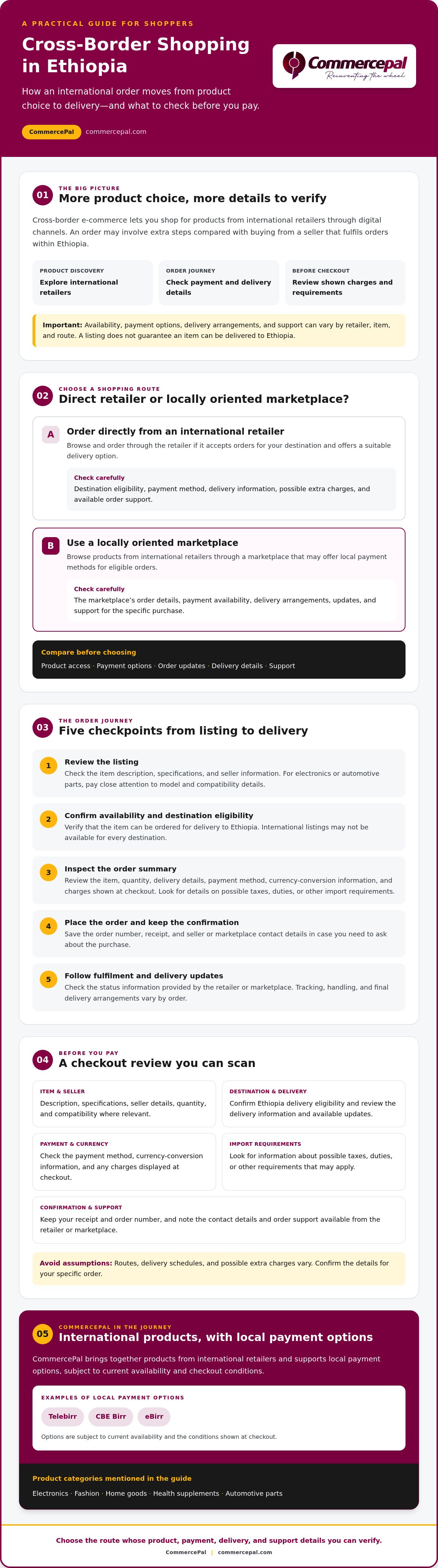
A cross-border order moves through several stages, but the exact arrangements depend on whether you buy directly from a retailer or use a marketplace. Before paying, check the item and destination details. Then keep your confirmation and monitor any order updates the retailer or marketplace provides.
What happens after you choose a product?
Use this journey to identify the usual checkpoints. The seller, marketplace, item, and delivery option can change how each stage works.
- Review the listing. Check the item description, specifications, seller information, and whether the product suits your needs. For electronics or automotive parts, pay particular attention to model and compatibility details.
- Confirm availability and destination eligibility. Make sure the item can be ordered for delivery to Ethiopia. A product listed on an international site may not be available for every destination.
- Check the order summary. Before confirming, review the item, quantity, delivery details, payment method, currency conversion information, and any charges shown at checkout. Also look for information about possible taxes, duties, or other import requirements.
- Place the order and save the confirmation. Keep the order number, receipt, and seller or marketplace contact details. These can help if you need to ask about the purchase.
- Follow fulfilment and delivery updates. Check whatever status information the retailer or marketplace provides. Tracking, handling, and final delivery arrangements vary, so don’t assume every order has the same updates or route.
In brief: choose a product, verify the seller and Ethiopia delivery eligibility, review the checkout details, save the confirmation, then follow the available fulfilment and delivery updates.
Where can a local marketplace fit into the process?
With retailer-direct shopping, you browse and order through the retailer, which sets the available payment, shipping, and update options. A locally oriented marketplace offers another route: it can bring together listings from international retailers and may provide local payment methods. Check its terms to understand who takes payment, how the order is sourced, and which party provides updates or support. A marketplace listing doesn’t mean every product from that retailer is included or eligible.
CommercePal, for example, aggregates products from international retailers. Its local payment options include Telebirr, CBE Birr, and eBirr, subject to current availability and checkout conditions. Review the current listing and order details before paying. To compare retailer-direct shopping with a locally facilitated option, look at how each route presents product information, payment, and order updates. You can also browse CommercePal’s available international products and check the terms shown for each item.
Direct Retailer or Local Marketplace: Compare the Shopping Routes
There isn’t one route that suits every order. Direct shopping lets you use the retailer’s own checkout and order information. A locally oriented marketplace may bring international listings together and offer local payment options where supported. Compare the details for the specific item and destination before deciding; neither route is universally cheaper, faster, or better.
| What to compare | Direct retailer | Local marketplace |
|---|---|---|
| Payment | Check which methods the retailer accepts and how currency conversion is shown. | Check which local methods are available for that order and how checkout works. |
| Product access | Selection and destination eligibility depend on the retailer and item. | Listings bring together selected products; not every retailer item may appear. |
| Order updates | Review the retailer’s confirmation and available status information. | Check which order details and updates the marketplace provides. |
| Support | Find out how to contact the retailer about the purchase. | Review the marketplace’s available support options and what they cover. |
When can ordering directly from a retailer make sense?
Direct ordering may suit you when the product is listed, the retailer accepts orders for Ethiopia, and its checkout offers payment and delivery options you can use. Policies vary by seller and item, so don’t assume one retailer’s terms apply to another product. Before paying, confirm the destination, shipping details, accepted payment methods, order total, and where to find updates or help.
When might a locally oriented marketplace be useful?
A local marketplace may be useful if you prefer to browse international listings in one place or use a locally familiar payment method. CommercePal supports Telebirr, CBE Birr, and eBirr, subject to current availability and checkout conditions. Check the listing, payment options, order summary, updates, and support information for the specific purchase. These details help you compare what each route offers without assuming the marketplace covers every item or delivery need.
For Ethiopia cross-border e-commerce, make the comparison practical: choose an item, then check whether the route clearly explains payment, delivery, order updates, and support. If an important detail isn’t clear, seek clarification before confirming the order.
What to Check Before Placing a Cross-Border Order in Ethiopia
A careful review before payment can help you spot missing details and distinguish charges confirmed at checkout from taxes or duties that may depend on import assessment. Use this checklist for each purchase. Terms can differ by retailer, product, and route, so verify the details for your specific order.
- Product details: Check the description, size, model, compatibility, quantity, and any specifications that matter for your intended use.
- Seller and eligibility: Review who is selling the item, whether it’s available, and whether the retailer or platform accepts the order for delivery to Ethiopia.
- Payment and currency: Confirm the payment method displayed at checkout, the currency used, and how the final amount is presented. Don’t assume a payment option or conversion method applies to every order.
- Order charges: Identify the product and delivery charges shown in the order summary. Treat these as separate from taxes, duties, or other import charges that may be assessed outside checkout.
- Delivery and updates: Read the stated delivery method and check whether tracking or order-status updates are available. Keep the confirmation details after placing the order.
- Returns and support: Review the return, cancellation, and issue-resolution terms before buying. Check how to contact the retailer or marketplace if a question comes up.
How can you check payment and order terms?
Pause at checkout and compare the selected item with the order summary. Confirm the product, quantity, destination, displayed payment method, currency, and total before confirming. If a marketplace is involved, check that the specific product and retailer are supported on that platform. Don’t rely on a payment conversion rate, service charge, or refund timeline unless it’s clearly stated in the current terms for your order.
What should you know about shipping and customs?
Check the delivery method and any tracking information provided for the selected order. Shipping arrangements can differ, and tracking availability shouldn’t be assumed. Customs treatment may also depend on current Ethiopian rules and the details of the shipment. Verify import and duty guidance with current authoritative Ethiopian sources, such as the Ethiopian Customs Commission, rather than relying on an old estimate or another shopper’s experience.
Before you pay, review the complete checkout terms and order summary. If any charge, payment condition, delivery detail, or return term is unclear, seek clarification from the retailer or platform first. For another locally oriented route, review CommercePal’s available products and checkout details, including the payment methods shown for the item you select. This is a useful final check for Ethiopia cross-border e-commerce.
How CommercePal Connects Ethiopian Shoppers with Global Retailers
CommercePal is an online marketplace serving shoppers nationally across Ethiopia. It brings together products from international retailers, including Alibaba, Shein, and Amazon, giving shoppers one locally oriented place to explore selected global listings. Availability can change, so check the current listing and order details rather than assuming every retailer’s full catalogue is represented.
For Ethiopia cross-border e-commerce, the practical value of a marketplace depends on how clearly it presents the details for your chosen item: what’s listed, which payment methods are available, and what the checkout terms say. CommercePal supports local payment methods such as Telebirr, CBE Birr, and eBirr. Available options may depend on the product and checkout conditions, so confirm the method shown before placing an order.
What can shoppers explore through CommercePal?
Listings may include categories such as smartphones and accessories, laptops and computers, home appliances, women’s abayas, health supplements, and automotive parts. The range doesn’t guarantee that a particular product, seller, or retailer item is available. Check the product page for its description, specifications, seller information, and order eligibility.
Retailers can differ in product selection, seller details, and purchasing terms. Compare the information on the relevant listings, then verify whether the specific item you want is currently available through the marketplace and eligible for your order.
How can shoppers take their next step?
Start with the product listing. Confirm the item suits your needs, review the payment methods displayed, and read the order and delivery terms before checkout. CommercePal offers 24/7 customer support, which can be a place to ask questions about platform information. Support can help clarify details, but it doesn’t guarantee a delivery outcome. Cashback incentives and free shipping on orders over 5,000 ETB may be available subject to their terms, so check current eligibility rather than assuming they apply to your purchase.
Choose based on the information available for your order. If the listing, payment method, or terms aren’t clear, seek clarification before confirming. Explore products on CommercePal and review the details for the items you’re considering.
Make Your Next Global Purchase with Confidence
Ethiopia cross-border e-commerce can open up more choices, but a clear order starts with checking the details. Confirm the product and destination eligibility, review the checkout total and payment method, and understand the stated delivery, tracking, and return terms. Direct retailers and locally oriented marketplaces offer different ways to shop, so choose the route that makes the order information clear to you.
CommercePal serves shoppers nationally across Ethiopia and brings together products from international retailers. Supported local payment methods include Telebirr, CBE Birr, and eBirr, though availability can depend on the order. CommercePal also offers 24/7 customer support; check its current support channels and terms if you need help.
Ready to compare available products and checkout details? Explore products and local payment options on CommercePal. Review the terms before confirming so you can shop with greater clarity and confidence.
Frequently Asked Questions
What is cross-border e-commerce in Ethiopia?
Cross-border e-commerce in Ethiopia means buying or selling products across national borders through digital channels. For shoppers, that can mean ordering directly from an international retailer or using a locally oriented marketplace that lists selected products from global retailers. Payment, delivery arrangements, and product eligibility depend on the seller, item, and platform. Check those details before checkout, since international orders may involve steps that differ from local purchases.
Can I buy from international retailers while living in Ethiopia?
Yes, you may be able to buy from international retailers, but availability depends on whether the retailer and selected product support orders for Ethiopia. Check the destination options at checkout, along with accepted payment methods and delivery details. If direct ordering isn’t suitable, a local marketplace may offer another route to selected international products. Marketplace listings and payment options can vary, so confirm current terms for the specific item before placing an order.
How does cross-border online shopping work from Ethiopia?
Start by choosing a product and checking its specifications, seller, availability, and eligibility for delivery to Ethiopia. Then review the checkout summary, payment method, currency, delivery information, and any stated charges before confirming. After ordering, save the confirmation and use available order-status updates to follow fulfilment. The process can differ between retailer-direct purchases and marketplace orders, so check which platform handles payment, updates, and support for your purchase.
Can I pay for international shopping with Telebirr or CBE Birr?
Some locally oriented platforms support Telebirr or CBE Birr, but these methods aren’t necessarily accepted by every international retailer or available for every product. CommercePal lists Telebirr, CBE Birr, and eBirr among its local payment options. Check the current checkout options for your selected order before relying on a particular method. Confirm the displayed currency and order summary as well, since payment conditions can vary by platform and purchase.
How long does cross-border shipping to Ethiopia take?
There isn’t one delivery timeframe that applies to every cross-border order to Ethiopia. Timing can depend on the retailer, product, shipping method, fulfilment arrangements, and any additional handling or import processes. Check the delivery estimate shown for your specific order, if one is provided, and review what tracking or status updates are available. Treat estimates as order-specific rather than assuming another product or retailer will follow the same schedule.
Are customs duties included when ordering from international retailers?
Not necessarily. A checkout total may show the product and delivery charges without confirming whether customs duties, taxes, or other import charges are included. Check the retailer or marketplace terms and look for a clear explanation of what the displayed total covers. Customs treatment can depend on current Ethiopian rules and shipment details. For guidance, consult current information from authoritative Ethiopian sources before placing the order.
Is it better to order directly or use a local marketplace?
Neither route is automatically better for every shopper or order. Direct ordering may suit you when the retailer accepts orders for Ethiopia and its payment and delivery options meet your needs. A local marketplace may offer selected international listings and locally familiar payment methods, depending on the item and current checkout conditions. Compare product access, order updates, support, and terms for the exact purchase, then choose the route with details you can verify.


