

A listing can look right and still be the wrong part. When searching for automotive parts online Ethiopia, a familiar product photo or matching name isn’t enough to confirm fit. Sellers may use different terms for the same component, and small specification differences can make a part unsuitable for your vehicle.
Before ordering, confirm your vehicle’s make, model, year, engine details, and the part number if available. Then compare listings by specifications, seller information, and whether the part is new, used, or refurbished. These checks are especially useful when a purchase involves cross-border delivery.
This guide explains how to identify the exact component, check compatibility beyond the product image, and compare options. It also covers payment, delivery, import checks, and order terms. CommercePal facilitates access to products from global marketplaces for Ethiopian shoppers, but availability and conditions vary by listing. Check the details of your specific order before purchase.
Key Takeaways
- Searching for automotive parts online Ethiopia is easier when you start with your vehicle’s full details, not just a familiar part name.
- Use a VIN or OEM reference to narrow your search, then confirm that the listing matches your vehicle’s configuration.
- Compare part references, fitment evidence, condition, seller details, included items, and order terms before choosing a listing.
- Check current shipping availability, payment options, delivery expectations, and import guidance before committing to an order.
- CommercePal helps Ethiopian shoppers access products from global marketplaces. Confirm the specific part’s availability and order conditions first.
Buying Automotive Parts Online in Ethiopia: Start With the Exact Part
A familiar part name is a useful starting point, but it doesn’t confirm that a component will fit your vehicle. Listings may use different names for similar parts, and one name can refer to several versions. Before comparing automotive parts online Ethiopia, identify the exact component and the vehicle it needs to match.
Fitment means whether a part matches your vehicle’s make, model, year, trim, and configuration. Confirm it before checkout, not after the part arrives. Some routine replacement items, such as filters, may be listed for several vehicles. Components such as headlights, sensors, or electronic modules can depend on a specific model version. Don’t assume a part is universal just because the listing uses a familiar name. The automotive aftermarket includes replacement parts and accessories, but individual components still have their own compatibility requirements.
Which vehicle details help identify a part?
Before searching, collect your vehicle’s make, model, model year, engine, trim, and market version. Market version matters because vehicles with the same model name can have different configurations. Check the owner’s manual and registration documents for vehicle details. The VIN is commonly found on the dashboard near the windshield, on a label inside the driver-side door area, or in vehicle documents. Share it only through an appropriate, trusted channel, and only when it’s needed to verify compatibility.
A reference number on the existing part can also narrow your search. Treat it and details in your registration documents as clues, not final proof: a previous component may have been replaced, and a label may not show every configuration difference. If you’re unsure, ask the seller to check compatibility against your complete vehicle details before ordering.
Why part names and photos are not enough
Sellers may describe the same component with different terms, abbreviations, or regional names—for instance, cross-border listings for model-specific vehicle mats might specify a méretpontos autószőnyeg to denote tailored dimensions rather than universal sizing. A search for a common name can therefore bring up parts for different vehicle versions. Photos are a starting point, not a fitment check. Similar-looking parts may have different connectors, dimensions, mounting points, or specifications that aren’t visible in an image.
Compare the listing’s reference number and written specifications with the number on your existing part, if available. Check whether the description identifies your vehicle’s year, engine, trim, or configuration. If these details are missing or unclear, ask for confirmation instead of relying on appearance. This helps you narrow a broad search to a part that is more likely to match.
How to Check Automotive Part Fitment Before You Order
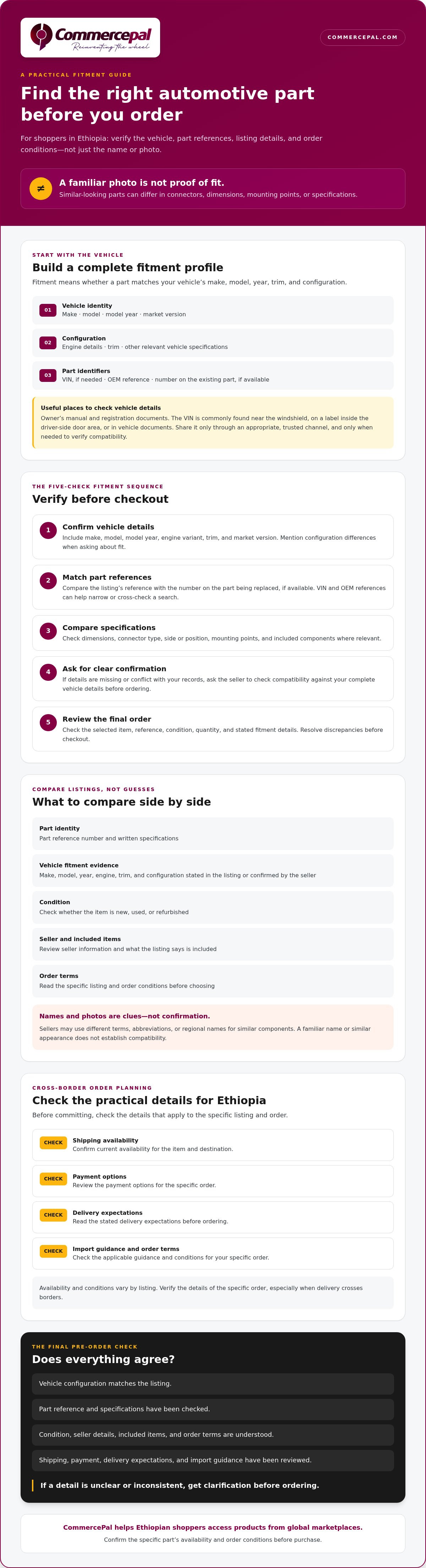
Use the same checks every time you order automotive parts online Ethiopia. A match should be supported by listing details or written confirmation, not just a product name that sounds right.
- 1. Confirm the vehicle details. Note the make, model, model year, engine variant, trim, and market version. If configurations differ within a model year, include those details when asking about fit.
- 2. Match the part reference. If available, compare the reference number on the part you’re replacing with the listing. A VIN, or vehicle identification number, identifies your specific vehicle and may help narrow a search. An OEM reference can also help cross-check a replacement part, but neither replaces checking the listing itself.
- 3. Compare specifications. Review dimensions, connector type, side or position, mounting points, and included components where relevant. Confirm that the written specifications match your vehicle and the part you need.
- 4. Ask the seller to confirm. If fitment details are missing or conflict with your records, request a clear answer before ordering. Don’t rely on assumptions or an unclear listing.
- 5. Review the final order. Check that the selected item, reference, condition, quantity, and stated fitment details match what you verified. Resolve any discrepancy before checkout.
Before purchase, make sure the part number and vehicle configuration agree.
Use VIN, OEM references, and vehicle specifications
The VIN is the vehicle identification number. It can help distinguish your vehicle from others with a similar model name. An OEM reference is an identifier associated with an original-equipment part and can help you compare replacement listings. Use both as cross-checks: confirm that the listing itself names the correct vehicle details and part specifications. If references are incomplete or conflict, ask for clarification before paying.
Ask the seller focused compatibility questions
Ask specific questions that you can check against the listing. Confirm whether the part fits your exact model year, engine variant, and trim, and whether production or market differences affect compatibility. Ask whether the item is new, used, refurbished, or described another way. Keep the written reply and compare it with the final order details. If the description changes or the confirmation is vague, pause and clarify.
Fitment checks don’t determine import requirements. For separate context on Ethiopia’s automotive market and import policies, review the International Trade Administration’s information on Ethiopian import and tax regulations, and confirm current official guidance before ordering. Once you’ve identified the part, review automotive parts listings on CommercePal and check the specific listing and order terms.
Compare Online Automotive Parts Listings Without Guesswork
Once you have a likely match, compare the listing details rather than choosing by headline or displayed price. When comparing automotive parts online Ethiopia, separate what the listing clearly states from what the seller claims and what you still need to verify. A lower product price alone doesn’t tell you whether a part fits, includes everything you need, or offers better overall value.
Use this checklist to assess options side by side:
| What to compare | What to check |
|---|---|
| Part reference | Does the listed number match the reference you’re checking? |
| Fitment evidence | Are your vehicle’s model year, engine, trim, and configuration stated? |
| Condition | Is it described as new, used, refurbished, or another condition? |
| Seller details | Are seller history, review patterns, and response information available? |
| Included items | Does the listing specify hardware, connectors, or other included components? |
| Order terms | Are return terms, shipping availability, and other order conditions clear? |
Mark each detail as confirmed in the listing, seller-stated, or still to verify. A description saying “fits your model” is a seller claim unless it identifies the relevant vehicle configuration. Where applicable, an official tool such as the NHTSA’s VIN decoder can help check vehicle details, but it doesn’t confirm that a particular listing fits. Compare the decoded information with the part’s stated specifications.
Assess seller information and product condition
Where the marketplace provides them, review seller history, customer review patterns, return terms, and response quality. Read condition labels carefully: new, used, and refurbished describe different states and aren’t interchangeable. Pause if photos are vague, references are missing, or specifications contradict each other. Ask for clarification before relying on the listing.
Understand OEM and aftermarket replacement options
An OEM part is made by the vehicle’s original equipment manufacturer or identified as an original-equipment part. An aftermarket part is made for replacement outside that original supply. Neither label alone proves quality, authenticity, or fit. Compare the stated fitment, materials, included hardware, and warranty terms where provided. A brand name or vehicle logo isn’t proof by itself. For riders seeking specialized vehicle gearing, you can discover Drive Systems USA to see how dedicated aftermarket drivetrain components like sprockets and chains are specified.
Your marketplace choice can affect which listings, seller details, and order terms you can review, but it won’t settle fitment. Judge each part by the evidence and conditions provided, and confirm unclear details before checkout.
Plan Payment, Shipping, and Import Checks for Ethiopia
Before paying for automotive parts online Ethiopia, map the order from listing to local receipt. Confirm that the exact item can be ordered through your chosen purchasing route. Then review checkout details, track the shipment, and check what steps apply when the item reaches Ethiopia. Conditions can differ at each stage, so verify the terms for your specific order rather than assuming every seller or item follows the same process.
Check delivery and customs details before checkout
Confirm that the specific part is available for delivery to your destination through the selected route. Review the stated shipping option, handling expectations, tracking information, and any order-specific limits or conditions. Shipping choices and timelines can vary by seller, item, and order circumstances. If a detail is missing, ask before paying.
Import requirements may depend on the item and current Ethiopian rules. Consult relevant official Ethiopian customs sources for current requirements and any documents that may apply. Don’t rely on an old estimate or assume that the seller’s delivery terms explain local import requirements. If you’re unsure what applies to your order, check official guidance again before checkout.
Review payment methods and final order information
CommercePal lists Telebirr, CBE Birr, and eBirr among its local payment options, but available methods can depend on the transaction. Confirm the option shown for your purchase, then review the final order amount and terms at checkout. Check what the amount includes and clarify any unclear charges or conditions before authorizing payment.
Keep a simple record as the order moves forward:
- Save the listing details and the seller’s written answers about availability and delivery.
- Keep the payment confirmation and order reference.
- Review shipment updates and save relevant messages about delays or changes.
- Check the item and order details when it arrives, and retain your records until receipt is confirmed.
Keeping these records makes it easier to track what was agreed and spot a mismatch between the listing, checkout, and shipment information. Before committing, confirm the current delivery route, payment method, and order terms for the part you selected. Review automotive parts listings on CommercePal and verify the details of your specific order before checkout.
Order Automotive Parts Through CommercePal With Clear Checks
CommercePal facilitates cross-border purchases from global marketplaces for Ethiopian shoppers. It isn’t a manufacturer or repair service, and a listing doesn’t automatically confirm fit for your vehicle. Automotive parts are a listed category, but individual items, sellers, and delivery options may vary. Treat each purchase as a separate check: identify the part, review the listing, confirm availability, and read the order terms before checkout.
What to prepare before searching
Gather your vehicle information and part details before searching. This makes it easier to compare listings and ask focused questions. Prepare:
- Your vehicle’s make, model, year, engine, trim, and market version.
- The part reference or OEM number, if available, plus clear photos of labels on the existing component.
- Any relevant mechanic recommendation, especially if it names a required specification.
- A short list of must-have details, such as position, connector, or included components, and your acceptable condition, such as new or used.
Share only the information needed to check the item. Keep personal vehicle details private unless they’re required through an appropriate support channel. A VIN can help match a vehicle, but don’t post it publicly or send it through an unverified contact method.
When to contact support before placing an order
Pause and ask for help if part references conflict, key product details are missing, or you can’t tell whether the item is currently available. CommercePal provides 24/7 support for platform and order questions. Check the current contact options and make your question specific: include the listing details and ask about availability, payment, delivery, or order terms. Platform support doesn’t replace a seller’s written fitment confirmation.
Before checkout, confirm that the selected item matches the details you reviewed, can be ordered through the chosen route, and has clear final order terms. Keep the listing, written confirmations, and order reference together in case anything changes.
Ready to begin? Explore automotive parts on CommercePal, then verify the specific listing and order conditions before you commit.
Make Your Next Parts Order With Confidence
Finding automotive parts online Ethiopia starts with the right match, not the most familiar name or lowest displayed price. Use your vehicle details and part references to check fitment, then compare condition, specifications, seller information, and included items. Before checkout, confirm availability, payment, delivery, and order terms for the specific listing.
CommercePal facilitates cross-border purchases and lists automotive parts among its product categories, though individual items and delivery options can vary. It also provides 24/7 support. Check the current contact channels and confirm order-specific details before you buy.
Ready to put these checks into practice? Explore automotive parts on CommercePal and review each listing carefully. With the right information in hand, you can make a more confident parts search.
Frequently Asked Questions
Can I buy automotive parts online in Ethiopia?
Yes. Ethiopian shoppers can use online platforms to access automotive parts, including through cross-border purchasing services. CommercePal facilitates purchases from global marketplaces and lists automotive parts as a product category. Check whether the specific part is available through your chosen route and can be delivered to your destination. Before paying, confirm fitment, item condition, shipping availability, payment options, and the order terms for that purchase.
How do I know if an online car part will fit my vehicle?
Compare the listing with your vehicle’s make, model, year, engine, trim, and market version. Then check the part reference and written specifications, including dimensions, connectors, and position where relevant. A similar product photo or familiar name doesn’t prove compatibility. If the listing doesn’t clearly confirm the match, ask the seller for written confirmation using your vehicle details before ordering.
Can I use my VIN to find the right automotive part?
Yes. Your VIN, or vehicle identification number, can help identify your specific vehicle and narrow a parts search. Use it alongside the part reference and listing specifications, since a VIN search alone doesn’t confirm that a particular item fits. Share the VIN only through an appropriate, trusted channel. If the listing gives incomplete or conflicting compatibility details, ask for clarification before checkout.
How long does it take to ship automotive parts to Ethiopia?
There isn’t one shipping time that applies to every part or order. Timing can vary by seller, item, shipping option, and order circumstances. Before paying, check the delivery estimate and handling expectations shown for the specific purchase, and ask for clarification if they’re unclear. Review how shipment updates will be provided, then monitor them and keep your order reference until the item arrives.
Can I pay for automotive parts online using Telebirr or CBE Birr?
CommercePal lists Telebirr and CBE Birr among its local payment options, along with eBirr. Available methods can depend on the specific transaction, so check the choices shown at checkout rather than assuming one will apply to every order. Confirm the final order amount and terms before paying, then save your payment confirmation and order reference.
Will I have to pay customs duties on automotive parts imported into Ethiopia?
Whether customs duties or other import charges apply depends on the item and current requirements. Don’t rely on a general estimate or assume shipping terms include any charges due locally. Check current guidance from relevant official Ethiopian customs sources, and review the order terms for details about what is included or remains your responsibility. Confirm unclear requirements before placing your order.
What should I do if the automotive part I receive does not fit?
Pause installation and keep the part, packaging, labels, and order records together. Take clear photos of the received item and its reference details, then compare them with the listing and any written fitment confirmation. Contact the seller or platform through its current support channel, share the order reference, and explain the mismatch. Ask what options apply under the specific order’s terms, since return or replacement conditions can vary.


