

A useful kitchen upgrade doesn’t have to be a large appliance. If you’re comparing the latest kitchen appliances in Ethiopia, options range from Comet stoves, microwaves and refrigerators to food processors, blenders and smaller kitchen tools. The right fit depends on what you cook, your available space and the tasks you want to make easier.
Choosing between essential appliances and convenient extras can be difficult. This guide covers the main appliance types and brands, what to compare before buying, and how to assess your options in Ethiopia.
Start with major cooking and storage appliances, then consider food-preparation tools and compact kitchen helpers. Knowing what each appliance does will make it easier to narrow the options to your household’s needs.
Key Takeaways
- Compare Comet stoves, microwaves, and refrigerators by the cooking or storage task you need them to handle.
- Look beyond major appliances to smaller kitchen tools that can make everyday food preparation easier.
- Choose a food processor or blender based on the ingredients and kitchen tasks you handle most often.
- Assess brands and retail options by comparing appliance types, practical features, and how each fits your home.
- Consider energy use and your household’s electricity supply when deciding which appliances suit your kitchen.
Comet stoves, microwaves and refrigerators
Comet is one brand to consider when comparing kitchen appliances in Ethiopia. Stoves, microwaves and refrigerators serve different needs, so begin by identifying the task you want to solve. Then compare the model’s stated features, dimensions and operating requirements. A stove is for cooking, a microwave for reheating or cooking suitable foods, and a refrigerator for storing ingredients and prepared meals.
Comet stoves
Choose a Comet stove that suits your cooking routine. List the meals you prepare most often, such as stews, sauces or baked dishes, then compare the stove’s stated functions and layout with those tasks. Don’t assume that every stove from the same brand has identical features.
Measure the space where the stove will go and compare it with the specific model’s dimensions. Consider how the appliance connects and operates in your kitchen, and follow its instructions for installation and use. If you mainly cook on the stovetop, prioritize the cooking areas. If you bake often, pay closer attention to the oven setup.
Comet microwaves
A Comet microwave may suit a kitchen where reheating and quick meal preparation are priorities. Think about the foods you’ll heat, then review the functions and instructions for the specific appliance. Settings vary between models, so compare the actual controls rather than relying on the brand name alone.
Check your counter or shelf space before choosing, leaving room to open the door and handle dishes safely. Match the stated capacity to the containers you use, such as a plate for reheating leftovers. Read the manual for cookware guidance and operating instructions to make sure the microwave suits your kitchen and routine.
Comet refrigerators
When choosing a Comet refrigerator, start with what your household needs to store: fresh ingredients, drinks or prepared food. Compare the model’s stated storage layout and dimensions with your kitchen space. A refrigerator can fit the available area yet still be inconvenient if its storage doesn’t suit your habits.
Measure the placement area and the route into your kitchen, including doorways. Review the product information for storage arrangements and operating guidance, and consider whether shelves and compartments will keep frequently used items accessible. If you store prepared meals, for example, look for a layout that accommodates your containers. Position and use the refrigerator according to its instructions.
Compare before choosing
Use the same method for each Comet appliance: define its purpose, measure the space, read the model’s details and compare them with your routine. Separate essential needs from optional features. A stove for cooking, a microwave for reheating and a refrigerator for food storage solve different problems, so assess each as a separate purchase.
Kitchen appliances available in Ethiopia
Kitchen appliances in Ethiopia range from large cooking and storage equipment to compact food-preparation tools. Compare each option by its purpose, space requirements, electrical needs and available support.
Imported kitchen appliances may be subject to customs duties or other taxes in Ethiopia, depending on their classification and import details. A stove, microwave and refrigerator may be treated differently, so don’t assume the same charges apply to every appliance type.
Warranty, repair and spare-parts options vary by brand and seller. Before choosing, review the stated repair process and spare-parts information. Keep your receipt and warranty terms together for future reference.
Energy Use and Electricity Suitability
Compare the energy information and electrical requirements for each model with how you plan to use it in Ethiopia. Start with the rating or energy details provided for that appliance, then consider how often it will run. A refrigerator operates regularly to store food, while a blender is typically used for shorter preparation tasks. Check the appliance label and instructions rather than making assumptions based on its brand.
Check the stated voltage and frequency against your household supply, and follow the manual’s operating guidance. Consider a refrigerator’s everyday use and how often you’ll run a microwave. These checks help you assess the appliance’s energy information without relying on a general claim that it is “efficient.”
Appliance Selection Checks
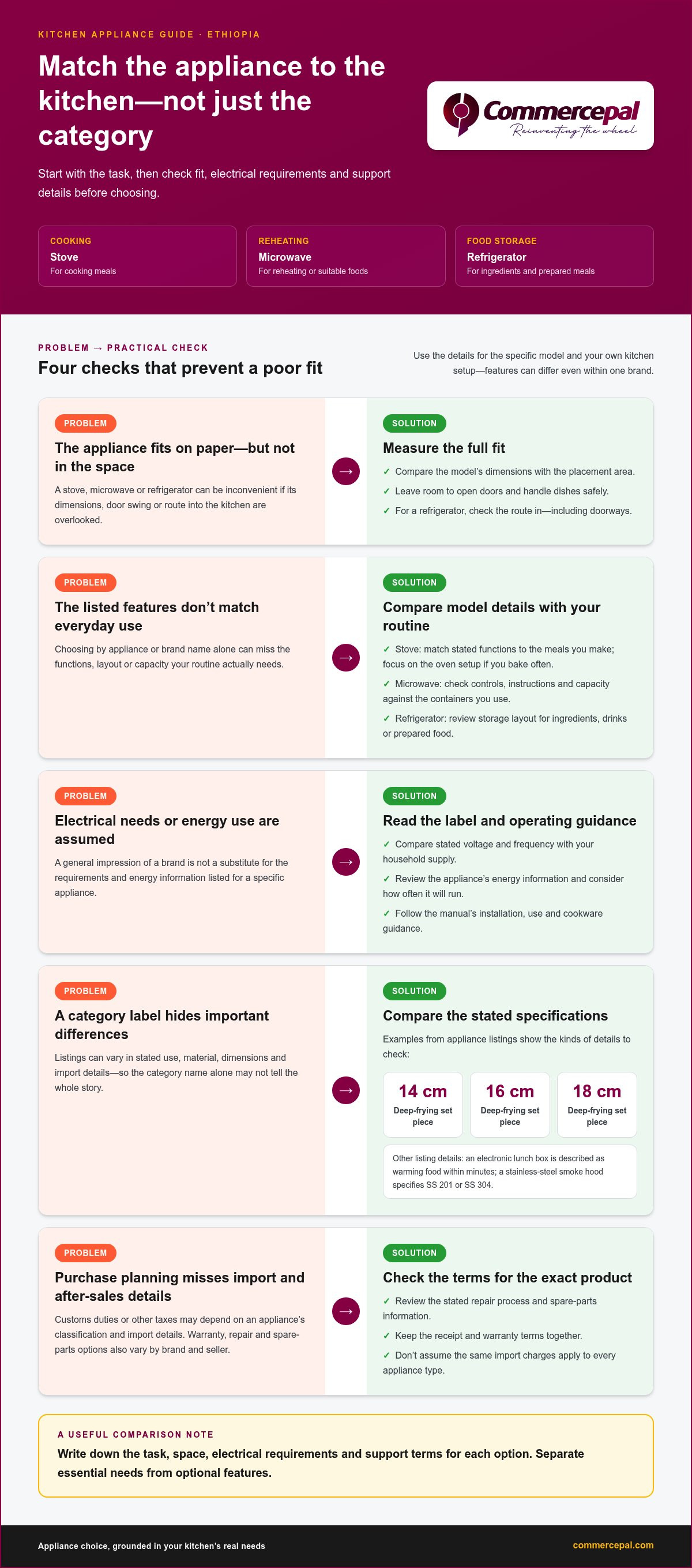
Choosing kitchen appliances in Ethiopia starts with matching each product to a real task. Measure the intended space, including room to open doors and reach controls, then compare the product’s dimensions and listed functions with your kitchen setup. A compact lunch box and a refrigerator serve different storage and meal routines, so assess their size and use differently.
Read the product instructions and check the controls, cleaning requirements and electrical specifications. For imported appliances, factor customs and tax treatment into your purchase planning. Keep the product description and warranty information with your receipt in case you need repair support later.
Available options also include smaller kitchen helpers and commercial fittings. An electronic lunch box listing describes it as warming food within minutes. A three-piece deep-frying set has pieces sized 14, 16 and 18 centimetres. A stainless-steel smoke hood listing specifies SS 201 or SS 304 material. These examples show why it helps to compare a listing’s stated use, materials and dimensions instead of choosing by category name alone.
For a quick comparison, write down the task, space, electrical requirements and support terms for each option. A blender used for occasional drinks has different priorities from a smoke hood intended for kitchen ventilation. Focus on the details that affect your own setup, then explore home appliances as a next step for browsing appliance categories.
Food processors and blenders
A food processor and a blender can both help with food preparation, but they suit different tasks. A processor is useful for chopping or mixing ingredients, while a blender is often used for drinks, sauces and smooth mixtures. Compare each model’s functions with the foods you prepare. The best fit depends on your routine, not just the product label.
Match the appliance to the task
List the meals and ingredients you prepare often. If you chop vegetables for stews or mix ingredients for a filling, compare food processors and their stated functions. If you make smoothies, blend fruit or prepare pourable sauces, focus on blenders. One appliance may handle some tasks, but don’t assume it can replace the other for every recipe.
Consider the texture you want, too. A blender suits mixtures that need to become smooth, such as fruit drinks. A processor can be more practical for ingredients that should stay chopped, such as vegetables for a salad. Read the product instructions to understand each appliance’s intended uses, rather than choosing based only on a broad claim like “multi-purpose.”
Compare capacity and controls
Match the container size to the quantity you usually prepare. A household making a drink for one person has different needs from one preparing ingredients for a shared meal. Check the stated capacity and consider where you’ll store the appliance. Also consider whether the container is easy to lift, pour from and clean.
Check the controls before choosing. Straightforward speed settings may be enough for simple drinks, while a processor’s attachments or functions may matter for chopping and mixing. Use the product description and manual to see what each control does. If you mainly blend soft fruit, for example, functions designed for other tasks may add little value.
Check practical use and care
Review the appliance’s stated electrical requirements and operating instructions before buying. Make sure there’s enough room to prepare ingredients and handle the container safely. Check how the parts fit together and which components need washing after making a sauce or smoothie. Clear care instructions make regular use easier.
Consider noise, weight and cleaning effort as part of your routine. A heavy processor may be awkward to move from storage, while a blender that takes a long time to clean may be used less often. Focus on the tasks you’ll repeat. If you make smoothies regularly, for example, easy pouring and cleaning may matter more than extra settings.
Make a simple comparison
Compare a food processor and a blender using the same checklist: intended tasks, stated functions, capacity, controls, storage, electrical requirements and cleaning instructions. Set aside features that don’t support your usual recipes. This keeps the decision practical and helps you choose an appliance that suits your cooking habits.
Home appliance brands and retailers
Brand names can help organize your search, but the model’s stated features matter most. Compare what each appliance does, then assess the retail channel and purchase terms.
Home Appliance Brands
Comet is one brand discussed in this guide, with stoves, microwaves and refrigerators covered above. Treat each appliance as a separate choice: a Comet stove and refrigerator have different purposes, features and space requirements. Compare the exact model rather than assuming every appliance from one brand has the same functions.
Use a consistent method for comparing any brand. Start with the appliance’s purpose, such as cooking, reheating or food storage. Then review its dimensions, stated functions, electrical requirements and operating instructions. A refrigerator’s storage layout, for example, matters for organizing ingredients, while a microwave’s listed settings matter for heating food.
Brand recognition alone won’t tell you whether an appliance suits your kitchen. Compare the model information with your household routines and available space. Keep the model details, instructions and purchase record together so you can refer to the exact appliance later, especially when checking operating or care guidance.
Home Appliance Retailers
Retail listings let shoppers compare product descriptions, purchase terms and delivery arrangements. Use them to narrow options by appliance type. For example, compare the listed dimensions of two refrigerators to see which might fit your kitchen. Apply the same approach to stoves, microwaves and smaller appliances.
Read the description for the specific model, not just its category or brand. Note the functions, dimensions and electrical requirements, and keep the receipt and warranty information with those details. These records make it easier to identify the appliance you bought and refer to its purchase terms.
Retailers may present product information and arrange fulfillment differently. Focus on what affects your decision: whether the item suits your needs, what the listing says it includes and the stated purchase terms. Don’t compare appliances by headline or image alone. A clear description of the exact model provides a more useful basis for comparison.
Before completing a purchase, record the appliance type, exact model, measurements, stated functions and operating requirements. Keep the listing details and receipt together. This works whether you’re comparing a Comet microwave with another model or assessing a refrigerator for your kitchen. Base your decision on information for the exact appliance, not broad assumptions about a brand or retailer.
Which kitchen appliances are energy-efficient and suitable for Ethiopia's electricity supply?
Energy use depends on an appliance’s power requirements and how you use it. In Ethiopia, compare each model’s electrical specifications with your household supply before choosing.
Read the appliance label
Start with the rating plate or product information for the exact appliance. Note its stated voltage, frequency and power requirements, then compare them with the supply where you’ll use it. Don’t rely on the brand name or a general description. A Comet microwave and another model may have different specifications, even if they serve similar tasks.
Check the product label or listing for energy-use information. Compare appliances in the same category, such as two refrigerators, rather than comparing a refrigerator with a blender. For a refrigerator used regularly, consider its stated energy information alongside the storage features you need. For a blender used briefly, how often and how long you use it also affect energy consumption.
Match the appliance to your routine
Choose functions you’ll actually use. A microwave with settings suited to your usual reheating tasks may be a better fit than one with extra functions you won’t use. A food processor can replace some manual preparation, but its energy use depends on its specifications and how often you operate it. Compare its listed power requirements with your intended use, not just an advertised efficiency claim.
Your habits matter after purchase, too. Avoid running a blender longer than a recipe requires, and use the settings described in its instructions. For a refrigerator, follow the manual’s guidance on operation and placement. This helps you use each appliance as intended without assuming one category always uses less electricity.
Check supply compatibility
Before buying, check the appliance’s stated electrical requirements against your household supply. Read any listed operating conditions carefully. A mismatch can make an appliance unsuitable for your setup, regardless of its energy label. Keep the instructions handy and follow their guidance for connection and operation.
Consider how appliances fit into your kitchen’s daily routine. A refrigerator generally stays connected for food storage, while a food processor is used for particular preparation tasks. If you may run several appliances at once, think about which tasks will overlap and review their stated power requirements. This helps you understand the electrical load without making assumptions about your household’s capacity.
Use a comparison checklist
Compare the energy information, electrical requirements, intended task and expected use for each model. Then review its instructions and space needs. A suitable choice is the appliance whose specifications fit your supply and whose functions support your routine. Explore appliance options with those checks in mind before deciding.
CommercePal: Smartphones & Accessories
CommercePal offers Home Appliances for readers comparing kitchen equipment and other household needs. Use the checks in this guide to narrow your priorities, then browse appliance options that fit your intended use and space. CommercePal also offers Smartphones & Accessories, Laptops & Computers, and Health Supplements, bringing several everyday shopping categories together. If you’re ready to explore, visit CommercePal online or contact CommercePal.
Make Your Next Kitchen Choice With Confidence
Make a shortlist before choosing an appliance. Note who will use it, which tasks matter most and how much space you can dedicate. This gives you a practical way to compare the latest kitchen appliances in Ethiopia with your household’s needs, rather than focusing on features you may rarely use.
Keep that shortlist handy as you explore options. CommercePal offers Home Appliances, alongside Smartphones & Accessories, Laptops & Computers, and Health Supplements. If you’re ready to take the next step, contact CommercePal for appliance help and continue your search with your priorities in mind.
A well-chosen appliance should suit the way you cook and live. Begin with what your kitchen needs, then compare your options one at a time.
Frequently Asked Questions
What are the latest kitchen appliances available in Ethiopia in 2026?
Options include stoves, microwaves, refrigerators, food processors, blenders, and smaller kitchen tools. The examples covered in this guide include electronic lunch boxes, pineapple cutters, deep-frying sets, and smoke hoods. Choose by task: a blender can help prepare drinks, while a refrigerator stores ingredients. Compare each appliance’s stated features and electrical requirements with your kitchen setup before deciding.
Which kitchen appliance brands and models are sold in Ethiopia?
Comet is one brand discussed here, with stoves, microwaves and refrigerators among the appliance types covered. Options and features vary by model, so use the exact model name when comparing details. Review its functions, dimensions, electrical requirements and instructions for a useful model-by-model comparison, without assuming every appliance from the same brand works alike.
Where can I buy kitchen appliances across Ethiopia?
CommercePal is an online marketplace offering home appliances to shoppers across Ethiopia. Browse by category and compare product descriptions with your household’s needs. Start by listing the appliance type and how you plan to use it, then compare the options. Online listings make it easy to review products and keep their details handy while you decide.
Which Ethiopian retailers offer appliance delivery, installation, and warranties?
Delivery, installation and warranty terms depend on the retailer and the specific purchase. Review delivery arrangements, whether installation is included, and the warranty’s coverage and claim steps. Keep the order record and product documents together. CommercePal offers home appliances through its online marketplace, so review the listing and purchase terms for the appliance you choose.
What are current prices for kitchen appliances in Ethiopia in Ethiopian birr?
Listed kitchen-item examples include a pineapple cutter for 550 Br, a stainless-steel strainer and deep-frying tong set for 590 Birr, and a stainless-steel smoke hood for 1,000 Br.


